


With today marking World Suicide Prevention Day – which this year is centred on changing the narrative around suicide, breaking down the stigma and challenging harmful myths surrounding mental health – several Jersey organisations have spoken about the help that is available.
World Suicide Prevention Day was established in 2003 by the International Association for Suicide Prevention in partnership with the World Health Organization and is held on 10 September each year.
Islanders struggling with their mental health are being urged to seek support through the numerous networks and charities available.
Express has sat down with a few key figures championing for suicide prevention in Jersey to hear what support is available this year…
Danny Cram Foundation, Eddie Da Rocha

Eddie Da Rocha, who helped set up the Danny Cram foundation in honour of his friend who took his own life aged 25, has urged Islanders to learn how to have conversations around mental health issues and spot people suffering is vitally important.
He likened it to learning CPR, and said: “Equip yourself to spot someone in crisis and support them or point them in the right direction – save a life, you can do it,” he said.
Mr Da Rocha admitted that sometimes it “isn’t that obvious on where you can go for help,” but for many a GP is the first port of call for Islanders. Express has also included a list of support lines at the bottom of this page.
However, he sympathised that “£45 to see the GP is off putting” or “long waiting lists,” yet encouraged faith in the system still, and to seek support in the meantime from all the “incredible” voluntary services.
Mr Da Rocha explained that Islanders’ general awareness of and language surrounding suicide can sometimes be lagging behind, with stigma’s and lack of education being prominent.
“If someone is physically very poorly they don’t think twice about calling 999 but when someone is feeling mentally very poorly it can be harder to reach out for help and it can be harder for people around you to spot that you need help,” he said.
Mr Da Rocha, shared that the Danny Cram Foundation has been actively trying to combat this by carrying out awareness trainingwith Barbertalk, which “helps open the conversation and provides some really simple strategies to help someone we may be worried about”.
“If suicide wasn’t such a big taboo and we all talked about it openly we would be much more able to prevent it,” he added.
Mr Da Rocha said that suicide can happen to anyone and is actively campaigning for increased education of mental health emergency numbers and support lines, in the same way that everyone is taught 999.
“We need a single, well known, easy to remember number for the mental health team e.g. 111 so that ongoing mental health support is available and accessible to those who need it”
He also calls for an A&E equivalent for mental health crisis where people can go to for triage and immediate support.
Although, the “most powerful” thing Islanders need to do is “talking about suicide until the words no longer carry such fear, shame and stigma.”
He said: “For the young adults in Jersey, I hope you take away an understanding that the system have failed many, and that’s why we started the Danny Cram Foundation, but together we have to build trust in that system again and in the professionals.
“Help us be the ones to voice and change how things are dealt in Jersey, as together we are more powerful, more united and a tight community were we can help be the CHANGE, for the young adults that need that help.”
Jersey Samaritans, Tarnia Snepp
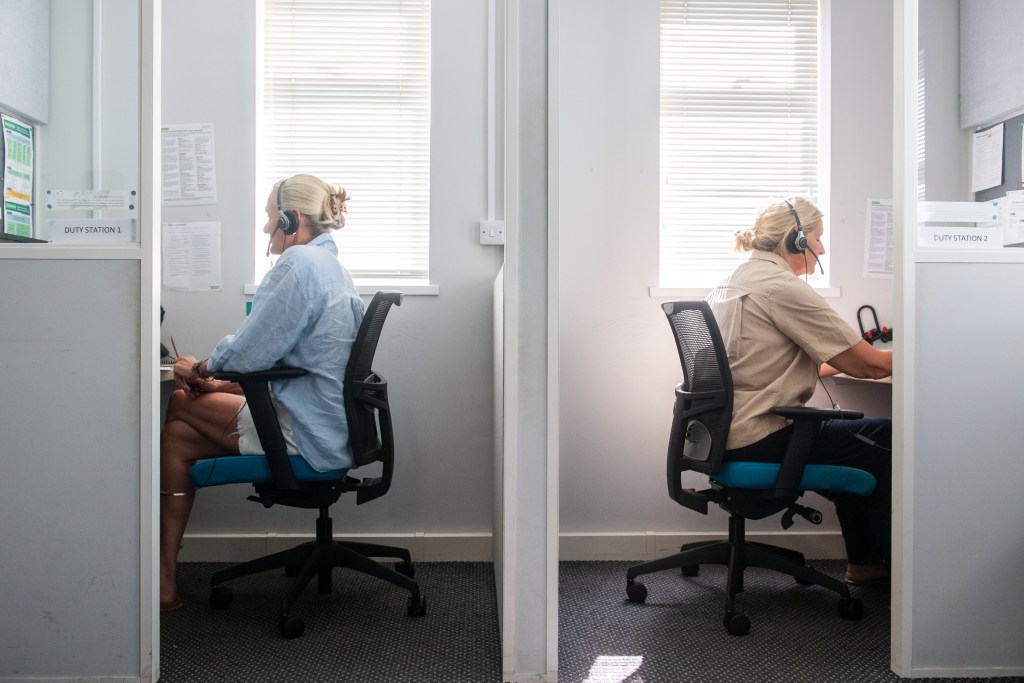
Jersey Samaritans is focusing this World Suicide Prevention Day to champion interruptions. Whilst most interruptions are “annoying” and “irritant”, some can be “lifesaving”.
More than a “third of people don’t realise that suicidal thoughts can be interrupted too”, according to the charity, with Samaritans Jersey’s new campaign actively attempting to shine a light on the power in which a seemingly ordinary interaction can have to break the cycle of crisis-thinking.
Jersey Samaritans branch director Tarnia Snepp said: “One in four of us will experience suicidal thoughts in our lifetime, but these thoughts can be interrupted. We mustn’t let politeness or fear of bothering someone prevent us from potentially making a life-saving interruption when they need it the most.
“Around 75% of people who die by suicide are men, highlighting the importance of reaching out and supporting those who may be struggling. One of the biggest myths about suicide is that talking about it will put the idea into someone’s head. In reality, asking someone how they are feeling can provide a huge sense of relief and give them the space to speak openly.”
Jersey Samaritans is advocating for all Islanders to bridge that extra gap in human communications with loved ones. An extra conversation, phone call, text message, or a simple ‘hey, how are you?’ – could save someone’s life.
“Every 90 minutes, someone in the UK and Ireland dies by suicide. But suicide isn’t inevitable.”
Mind Jersey, Patricia Tumltey

Mind Jersey is running a drop-in coffee session between 10am and 4pm today, to offer a dedicated time to “pause” and remember that “behind every statistic is a person and the families, friends and communities behind them”.
The charity is encouraging anyone to attend the drop-in session, whether they are affected by suicide, want a place for reflection and quiet contemplation or if they have been bereaved through suicide.
Dr Patricia Tumelty, executive director at Mind Jersey, echoed said: “Asking someone if they are having suicidal thoughts does not increase risk and can get a supportive conversation going.”
“Suicide Zero Alliance describes how most people do not wish to die from suicide; they just want the way they are feeling or the situation they are in to stop or change,” Dr Tumelty added.
“Building that understanding and confidence across our Island helps create communities where people feel able to reach out earlier and where more Islanders know how to respond when someone needs support.”
Talking matters: Mark Birrell’s journey to learning to open up
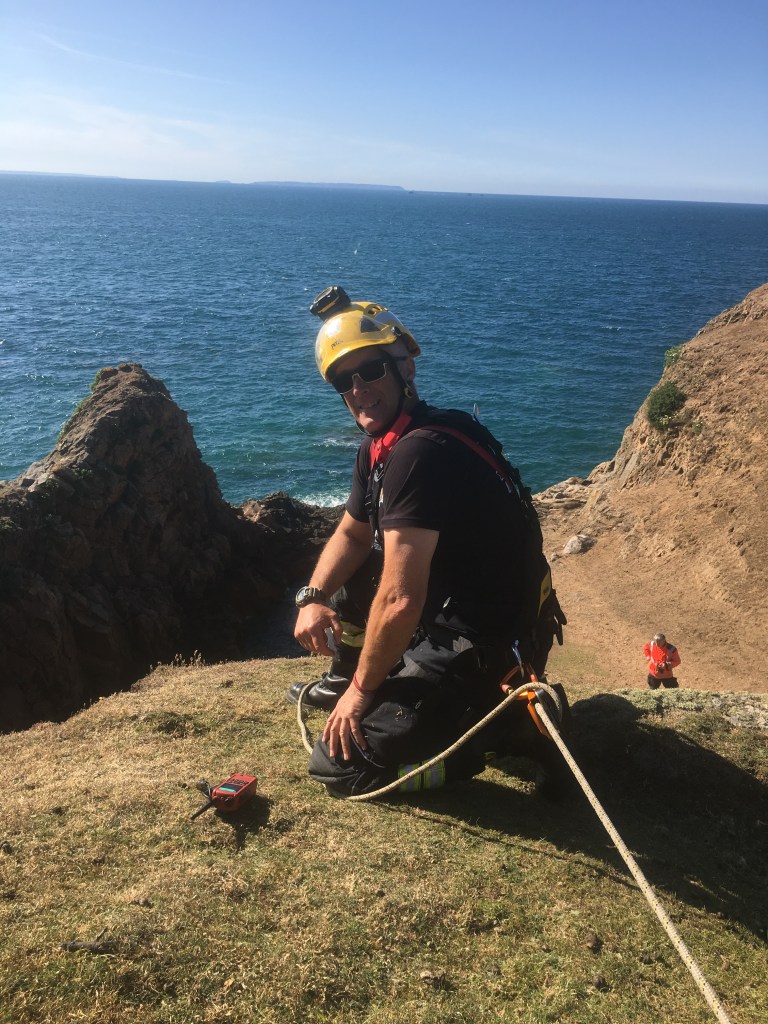
This year a joint campaign has been launched between Channel Islands Air Search, Guernsey Mind and Mind Jersey – ‘We See You’ – hoping to raise awareness of the growing link between emergency responses and mental health crises.
Over the past five years, 42% of Channel Islands Air Search deployments have been missing person searches. Mark Birrell (63) is a spokesperson for the campaign and is using his story to evidence that “talking matters.”
Aged 20, police officers arrived at Mr Birrell’s workplace to tell him that his mother had taken her own life.
Mr Birrell placed his grief aside, and only much later did he begin to recognise the effect of leaving difficult experiences and emotions unspoken for so long.
In 1987, Mark joined the fire service, a job which exposed him to countless traumatic and fatal situations that most people will never experience.
Like many in this line of work, Mr Birrell developed his own coping mechanisms. Dark humour or being the “tough guy” – was his typical go to, allowing the bad to just bounce off him.
After years of adding unchecked trauma, the first cracks in his wellbeing began to show. His trauma turned to anger, with Mr Birrell also suffering from insomnia, becoming increasingly introverted and losing enthusiasm for things he once enjoyed.
Eventually, he reached the lowest point in his mental health, experiencing uncontrollable crying and suicidal thoughts.
For somebody who had experienced the devastation of losing his own mum to suicide, finding himself in that position was profound.
Mr Birrell said: “I didn’t want my life to end, but rather, I wanted what was happening inside my head to end. I wanted the noise to stop. It is this distinction why I believe it is so important that we talk openly about suicide.”
In a “switch flick moment,” Mr Birrell experienced a turn around when a friend reached out to him regarding their own mental health, which was when he realised how desperately he needed to speak to someone.
After decades of ignoring the problems and staying quiet, Mr Birrell sought help which allowed him to talk about his feelings, experiences and deeply buried trauma.
Slowly, he started learning to live with what had happened rather than trying to push it back into the box.
Today, Mr Birrell works with the wellbeing team within the fire service, in the hopes to “make everyone feel seen.” He advocates for everyone to check in with their family, friends and colleagues no matter how strong, capable or successful that individual may be on the surface.
“I cannot change what happened to my mum. I cannot erase the traumatic things I witnessed, and he cannot undo the period when I found myself contemplating suicide. But I can talk about them.”
Where to access support…
- Your GP (& out of hours GP at the hospital)
- Mental Health crisis line: +44 (0) 1534 445290
- Mind Jersey: 0800 7359404
- Samaritans: 116 123
- The Listening Lounge: 01534 866793
- Child & Adolescent Mental Health Service (CAMHS): 01534 445030
- Mental Health Service: 01534 445841
- Attend A&E or call emergency services: 999
