

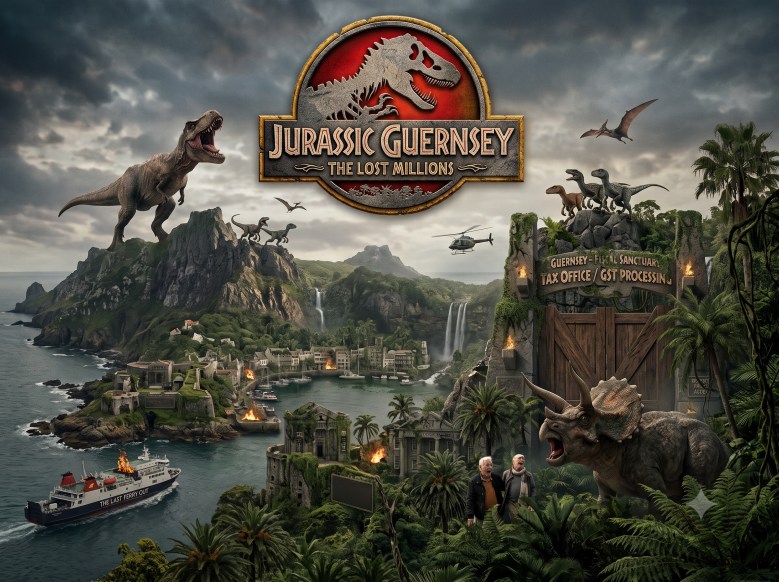
There was a time when Guernsey worried about losing its young people. Then came GST+, the latest and greatest innovation in making ordinary life slightly more unaffordable than it was yesterday.
The policy’s supporters promised resilience, sustainability, fiscal responsibility and, somehow, “more money in your wallet.” A curious claim, given that most islanders had already mentally spent their wages before payday even arrived. The money wasn’t sitting in any wallet waiting to be liberated; it had long since been allocated to mortgages, rent, food, fuel and childcare.
GST+ didn’t put more money into people’s pockets; it simply reached into pockets that were already empty.
We were told, “Trust us, we have run the numbers and they are solid,” even as overspending within government was left unaddressed and without accountability. The structural holes in the bucket went unrepaired, while the expectation remained that everyone else should simply keep pouring water into it anyway.
Supporters insisted the reform would strengthen the island’s future, but young families looked at their numbers and quietly reached a whole different conclusion.
Housing costs, childcare, food inflation and now a broadened tax base combined to produce a simple outcome: exit, stage left.
Graduates left. Tradespeople left. Nurses left. Teachers left. The people who might once have built the next generation simply boarded the ferry instead.
And all the while, the island’s leadership continued to chase the reassuring glow of fiscal approval ratings, guided by the ancient wisdom of career civil servants whose reference points for “affordability” had long since detached from lived reality.
The Policy & Resources Committee, eyes fixed firmly on spreadsheets and credit ratings, seemed increasingly distracted from a rather inconvenient truth: economies are not sustained by ratings agencies; they are sustained by people.
A Demographic Theme Park
What is left behind is a curious demographic ecosystem: retirees, care homes, and an ever-growing demand for people to look after both.
In fact, Guernsey is beginning to resemble the fictional island of Isla Nublar from the 1993 film Jurassic Park: an isolated place increasingly populated by creatures from a gone-by era, while a shrinking number of workers struggle to keep the park running.
There is, however, one important difference.
In Jurassic Park, the dinosaurs were engineered in laboratories.
In Guernsey, they have simply outlasted everyone else.
As more young people leave, the demand for carers rises, forcing the island to import workers from abroad to fill the gaps. These new arrivals are not coming to join a thriving, balanced community. They are arriving to sustain a system that has quietly hollowed itself out from within.
It all feels eerily familiar to a famous line from the film:
“Your scientists were so preoccupied with whether they could, they didn’t stop to think if they should.”
Substitute “policymakers” for “scientists”, and the analogy writes itself.
One can almost imagine a future tourism campaign:
“Welcome to Jurassic Guernsey: where the credit rating is excellent, the fiscal rules are followed, and the average age is somewhere between retirement and archaeology.”
A small island, carefully optimised, just not for the people who still need somewhere to live in it.
Tourism Isn’t Escaping Either
Tourism, once quietly relied upon as a steady seasonal lifeline, has not escaped the pattern either.
Visitors, already increasingly tempted elsewhere, have long since begun to look beyond the island for better value for their hard-earned money. What was once a convenient stopover or short-break destination has gradually become a “maybe next year” in favour of cheaper European alternatives offering more for less.
Local shops, once happily boosted by tourist spending, are now feeling the squeeze as rising costs push prices up across the board. What should be a simple holiday browse-and-buy has turned into constant price comparisons with cheaper destinations just a short flight away.
Add in tourists having to think about tax refunds and paperwork, and the whole thing starts to feel a bit less like a break and a bit more like admin.
And really, the last thing you want on holiday is to be thinking about tax or money at all.
Tourists will soon simply sail past, opting instead for destinations where a meal in town doesn’t require careful budgeting and a week away doesn’t feel like a second mortgage.
Welcome to Jurassic Guernsey
P&R’s time was running out, just like time was running out for the dinosaurs.
But unlike the dinosaurs, who had no idea what was really going on, Guernsey’s electorate does know what is happening: the reality of everyday life, apart from some on the island who are focused on their latest investment or property sale.
For most working and middle-class households, the everyday reality is a job that hasn’t paid enough for decades, persistently high costs, and a future that feels increasingly uncertain.
One thing, however, is known for certain: your pint of milk, your energy bill and your water bill will go up once again next year.
We will moan about it, like we do about the weather, and carry on, because we have to.
There is no time to sit down and reflect, because the landlord is expecting the rent.
Lars Janssen
Monday 6 July 2026
