

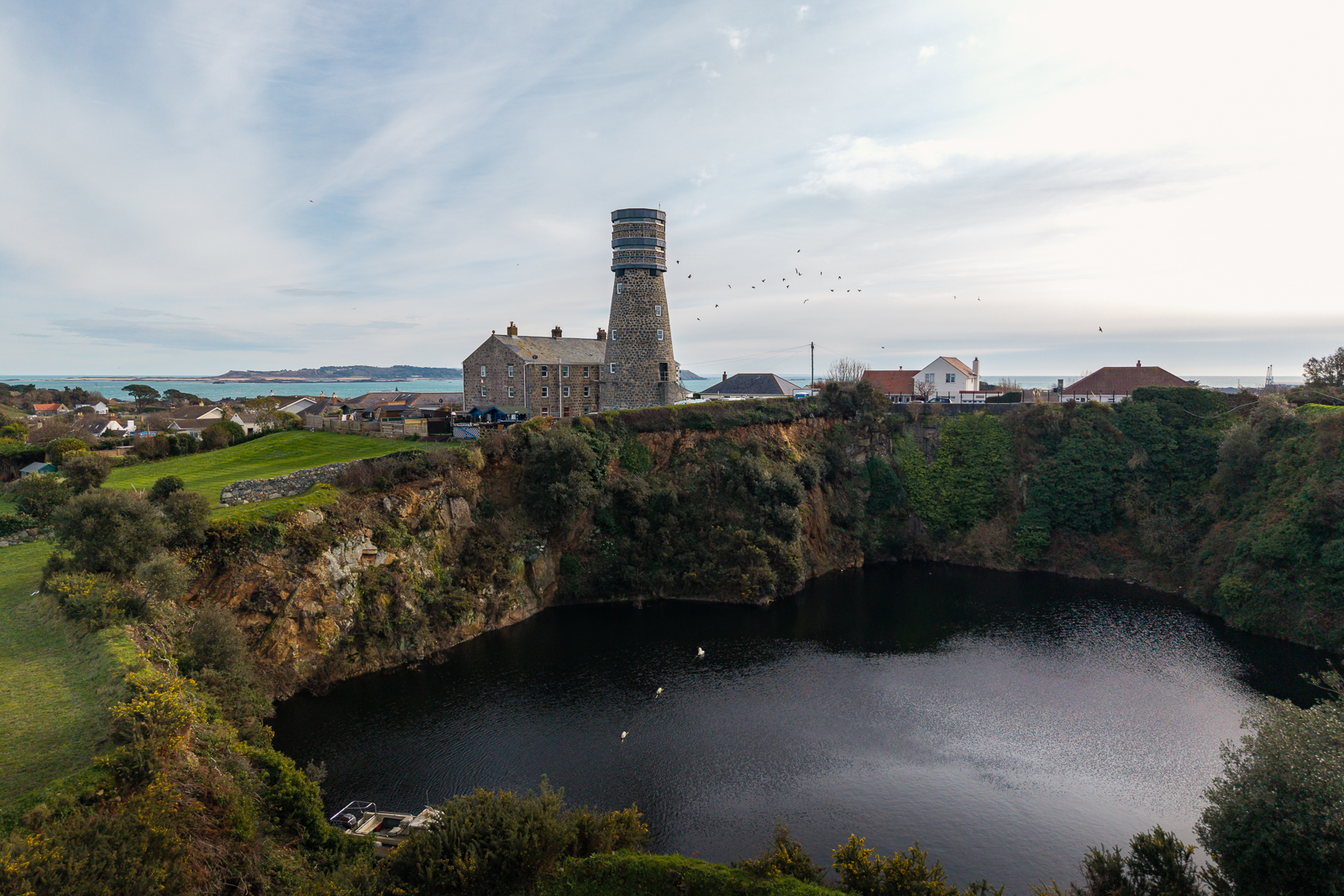

A mill which can trace its history back more than 250 years has broken new ground, by becoming the first property to be added to Guernsey’s open market under a new housing rule.
Vale Mill was originally built as a wooden flour mill in 1770, before being knocked down and replaced with a granite structure 84 years later.
Now it’s being reinvented for the 21st century and beyond, as a six-storey, four-bedroom home with an observation deck, floating sunroom and walkways around the adjoining quarry.

The updated rules allow some new builds to be granted open market status in principle before construction starts, in order to entice investors.
However, buildings which have ‘historic or cultural significance’ and would otherwise be at risk are also eligible.
Vale Mill was used as a flour mill until 1940 and an observation tower during World War Two, but fell into disuse after the war – which is why it qualifies.
Historically and culturally important
James Ridout, Director of Vale Mill Limited, said further investment would have been “simply unviable” without open market status, so there would have been a “risk the building would once again fall into disrepair and potentially be permanently lost”.
Instead, a “historically and culturally important building” would be safeguarded for future generations, “creating a modern state-of-the-art home of which Guernsey can be proud”.
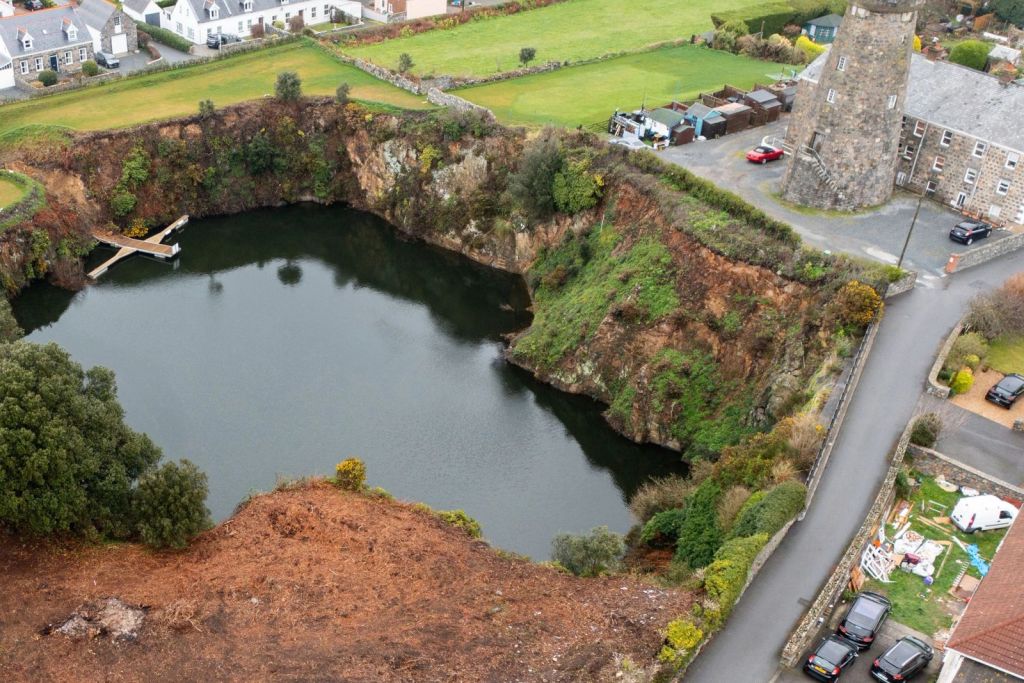
Deputy Sasha Kazantseva-Miller, Vice-President of Housing, said the committee was “very pleased to award an inscription in principle” to the “unique” property.
The new rules gave the States a “number of tools” to encourage development of new homes and “preserve buildings that form part of our historic and cultural heritage”, she added.
What is the open market?
Homes in Guernsey fall into two categories: local market and open market.
People living in local market homes need to be from Guernsey or hold a license to live and work on the island.
Open market properties, by contrast, can be bought or rented by anyone with a British or Irish passport, or who is otherwise eligible to live in the UK.
Because of this, open market properties are often much more expensive to buy or rent.
So, getting open market status is attractive to property investors, as it means they’re likely to get more money when the dwelling sells.
What are the new rules?
Last year the States agreed to a series of rule changes, including introducing ‘Inscription in Principle’, which allows a property to be given open market approval before it’s built.
The new regulations mean up to three new builds can be added to the island’s open market register each year – a change deputies hoped would raise £1.5m a year in extra revenue.
The new rules also allow developers to transfer open market inscriptions between properties, under certain conditions.
This is intended to make it easier for open market residents to downsize, for example once their children leave home.
Buildings that don’t meet the normal criteria can also be granted open market status in ‘exceptional circumstances’.
This applies if the property is a ‘historic or cultural building at risk’ or for projects deemed to have ‘wider strategic importance’ by delivering ‘public, social, economic or environmental benefits’.
Vale Mill is the first property to be granted provisional open market status based on ‘exceptional circumstances’.
