

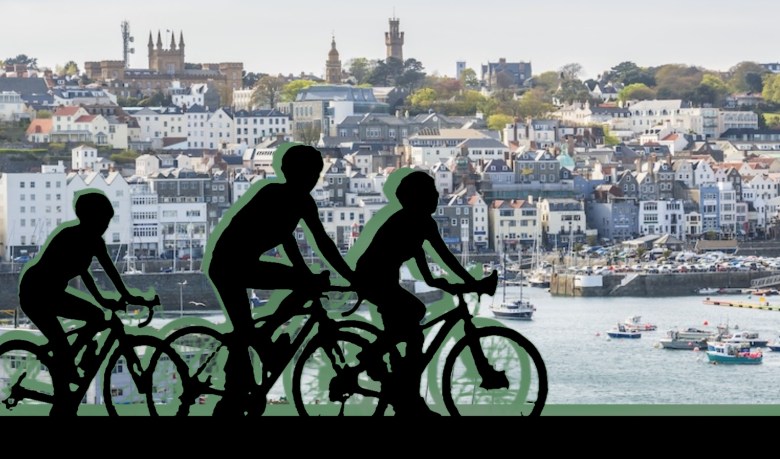
Guernsey’s Better Journeys Week saw a record number of people choosing to ditch the car, and take up active travel methods like walking, cycling, and public transport.
Some of the latest data shared by organisers shows a significant increase in active journeys, with a notable rise in cyclists and other ‘active travellers’.
During this year’s event held in May, 19% of all recorded journeys were ‘active’.
Despite this progress, car usage does remain high, with 80% of observed car journeys being single occupancy.
Barrie Duerden, Committee Member for Better Journeys Project, said it’s all looking really positive though.
“There’s been a consistent strong increase in active travel. In 2022, active journeys made up 14.2% of travel and by 2024, that figure had climbed to 17.9%.
“During Better Journeys Week this year, 19% of all recorded journeys were active. I expect that number will continue to rise as we head into summer.”
The Better Journeys Project encourages those who made the switch to continue with active travel for benefits such as improved health, reduced emissions, and less traffic.
“While we’re delighted to see more people walking, cycling and using the bus, there’s still work to do,” said Rollo De Sausmarez, Director of the Better Journeys Project in Guernsey.
“We encourage islanders to choose active travel, even once or twice a week. It makes a big difference to our roads, our health and our environment.
“For example, there were 10,283 bus users on Liberation Day when travel was free – it shows that when we give people the opportunity, they do choose more sustainable ways to get around.”
The Guernsey organisation is now partnered with its equivalent in Jersey, where Director, Kate Huntington said everyone needs to work together to ensure money is invested wisely for the greater good.
“These statistics also show that when more of us choose to travel by bike, foot, or bus, the demand for better infrastructure follows. If we as islanders want to shift away from car dependency, we need to make sure our infrastructure reflects that.
“More people using active travel means more need, and more justification, for investment in safer, more accessible routes for everyone. That’s how we start to rebalance an island network that has long been dominated by cars.”
