

At least one Guernsey Deputy deleted hundreds of emails from voters before reading them, after becoming overwhelmed by the flood of messages being sent about GST.
Deputy George Oswald later admitted the move was a misjudgement, saying he had been struggling with a “significant work load” while his inbox was “pinging virtually continuously” with messages from concerned islanders.
The Deputy said he had since recovered the emails, reviewed them and “put his hands up” to what he described as a “mistake”.
But the revelation has left Express readers asking a key question: Was it against the rules for a Deputy to delete emails from voters?
‘Hands up’ to deleting emails
Deputy Oswald’s admission came after Deputy Rob Curgenven claimed some politicians had deleted “hundreds and hundreds” of emails from residents contacting their representatives about GST.
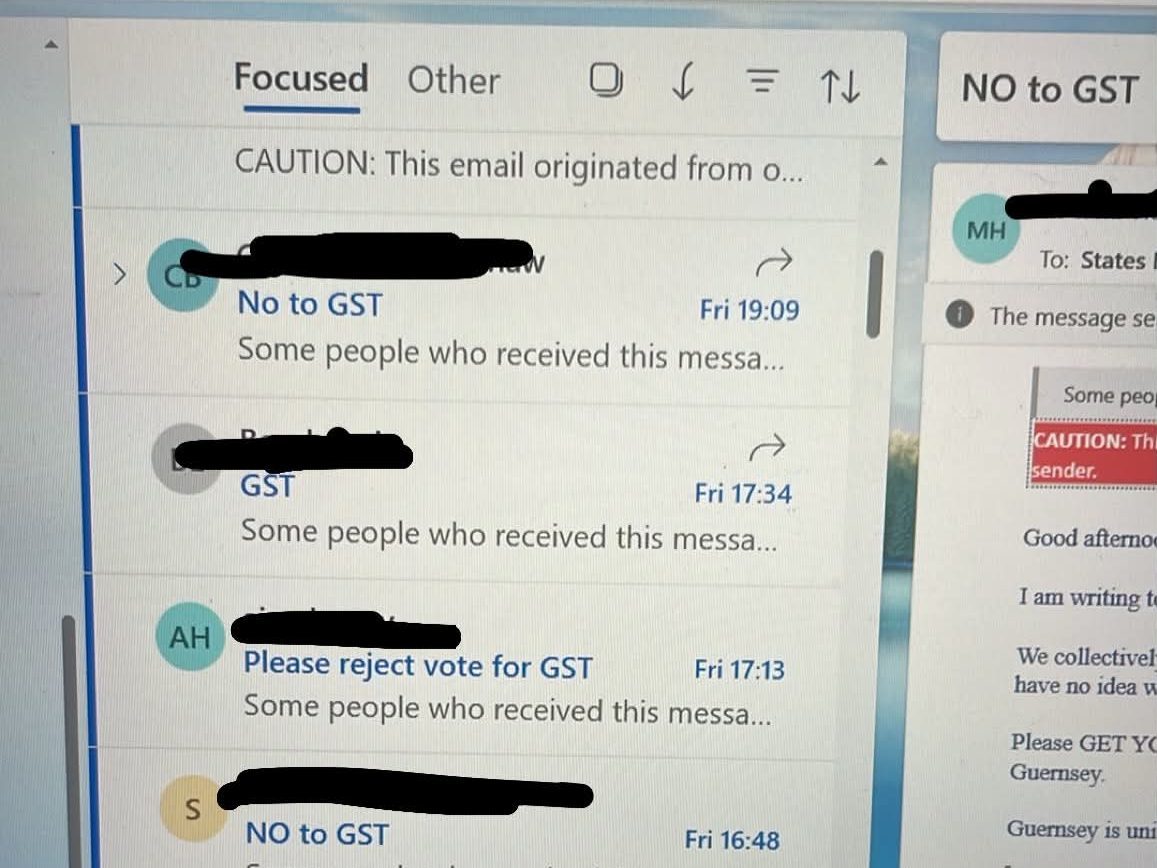
Express contacted every Deputy, as well as Alderney’s representatives, asking whether they had deleted any GST-related emails from members of the public in the previous eight weeks.
Of those contacted, 25 replied and 15 so far have not.
Deputy Oswald was the only Deputy to confirm he had deleted emails before reading them.
He later said the emails had been recovered and that those containing “firm ideas, suggestions, specific circumstances” had been separated into another mailbox.
Several other deputies said they had deleted emails after reading them or responding, as part of managing increasingly busy inboxes.
Readers ask: Did he break the rules?
One Express reader, commenting on Facebook, asked whether deputies had a “legal and ethical” duty to retain emails from constituents, and questioned whether deleting them broke any freedom of information or data protection rules.
“Deleting emails effectively mutes the voices of the people who elected the official to represent them,” they added.
The answer, according to Guernsey’s data protection watchdog, is not a simple yes or no.
While it understandably did not want to comment on the ’emailgate’ revelations themselves, The Office of the Data Protection Authority (ODPA) said there was no automatic rule preventing deputies from deleting emails.
However, deputies must follow the principles of the Data Protection Law when handling information from voters.
Commissioner Brent Homan said the rules depend on which role a Deputy is carrying out.
Rules explained
When deputies are acting in a constituency role, they are considered data controllers in their own right.
That means they are legally responsible for any personal information they collect, store or use.
Many deputies have disclaimers in their email signatures to this effect.
For example, Deputy Oswald’s reads: “In my constituency role I may process your personal data to carry out my functions as an elected representative, and as necessary to respond to and meet your requests.
“In some cases, I may need to share your correspondence with States of Guernsey staff.
“For further information on how your personal data is processed, please go to https://www.gov.gg/article/165528/How-Deputies-process-personal-data.”
When deputies are acting as members of a States committee, responsibility sits with that committee, which becomes the data controller.
Mr Homan said: “The role of deputies under the Law very much depends on which of their hats they are wearing.”
Training and guidance
All current deputies were given guidance by the ODPA during their election campaign, with a “Top 5 tips” blog post published online.
The guidance reminded candidates that they were responsible for any personal data they collected or stored during the campaign, including information from voters.
It also warned candidates that personal information must be handled securely, only kept for as long as necessary, and properly disposed of when it was no longer needed.
Once elected, deputies undertake mandatory training, including in data protection and handling confidential information.
Express does not have data on how many deputies have completed their mandatory data protection training.
The combination of candidate guidance and mandatory training means deputies were given clear information about their responsibilities.
No simple deletion deadline
The ODPA said the Data Protection Law does not provide a fixed timescale for how long information must be kept.
Instead, it requires controllers to keep personal data “for no longer than is necessary”.
Mr Homan said: “The DP Law does not provide the approval to delete personal data or any definite timescales for personal data to be held.”
What counts as “necessary” depends on the circumstances – including why the information was collected, how sensitive it is and whether it may still be needed.
Deputies have legal responsibilities
The ODPA has previously warned election candidates and elected representatives that they have particular responsibilities because they handle large amounts of personal information.
That can include electoral roll details, names, addresses and political opinions.
Political opinions are classed as special category data under the Data Protection Law and require additional safeguards.
The ODPA guidance states that representatives must ensure personal information is properly stored and securely disposed of once it is no longer required.
A fine line: Inbox management vs losing records
The watchdog said there is no “one size fits all” approach to storing and protecting personal data.
Security measures should reflect the sensitivity of the information and the possible harm if it is lost, damaged or accessed improperly.
The question now is not simply whether emails were deleted – but whether they were handled in a way that complied with the rules governing how deputies treat their constituents’ information.
Whatever the legal position, the controversy has raised wider questions about how elected representatives manage the messages they receive from the people they represent.
