

Despite 90% of the island’s electricity demand being met through the subsea cable link with France, Guernsey Electricity is constantly having to keep an eye on what upgrades it might need to fund, to continue delivering locally produced power at a moment’s notice.
At peak times, the cable simply can’t deliver all the electricity needed, meaning on-island generation is relied upon.
On-island generation in turn relies on millions of litres of fuel being stored at the Power Station, with generators ready for switch on 24 hours a day.
With a legal mandate to maintain enough fuel to keep the island running for a month, Guernsey Electricity also relies on the weather and other external pressures that it has no control over to make sure that there’s enough power every time we want to turn the lights on.
“It’s actually mandated by the States as a requirement as an electricity generator that we have to maintain enough on island generation to provide all the power demands throughout the year,” explained Operations Engineer Joel Bramer.

As well as needing to regularly source the best deals for buying diesel in bulk and ensuring it gets to the island in time to maintain the four-week supply level, the engineering team at GEL also have to make sure the on-island equipment is working as it should be at all times.
“We periodically test start our generators to make sure that they’re still operational and running with no faults or anything like that,” he explained.
“It’s a little bit like your car. You can imagine your lawn mower as a good example. You keep your lawn mower in the shed all winter, you come out in spring, try and start it, and it just won’t go on, so to avoid any of that trouble, if we were to need an engine urgently for any reason, we periodically test start them just to make sure that they are still running and everything working correctly.”
To keep on top of these things, GEL maintains a regular maintenance programme with some work streams rolling over multiple years.
One example is the tank farm, which holds the millions of litres of fuel that GEL legally has to have in stock.
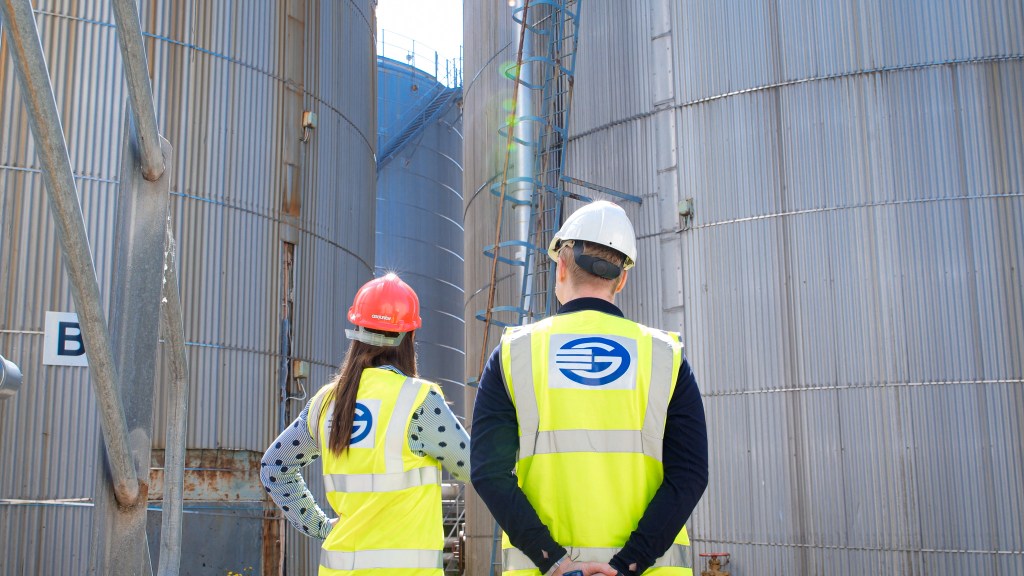
The tank farm contains numerous large storage vessels – some of which are newer than others.
Identified by letters, Joel said the tanks themselves need regular investment.
At least two of the eight tanks are being decommissioned and may need replacing if the island can’t reduce its peak power demands.
“Going back to this requirement that we must maintain four weeks of on island operation capacity. As we are today with the six tanks that we have in service, we’re about there. That’s fine. But if demand continues to increase, particularly at the peaks, because we have to cover the peak, it’s not just the average or the best case scenario, it’s whatever the recorded peak is, so if 93 today becomes 100 this year or next year or the year after, then we’re going to have to put in more fuel storage to make sure that we’ve still got that capacity on island.”
The 93MW peak Joel references was recorded in December last year.
With the cable able to import 60MW, almost half again had to be generated on island at that moment in time.
Joel explained that demand peaks of 80 or 90MW are now regular occurrences during the winter, meaning the island relies on the diesel fuelled generators to power our lives much more often than when we rely solely on the subsea cable.
“We import around 90% of our electricity from France via the cable, and that’s from certified renewable generation,” he said.
“Everything above what we can import, we have to generate on island and that’s using our diesel engines.
“As we are at the minute, with the warmer months we don’t need to generate anything on island,” he said.
As we head into autumn and winter, we will need to produce more electricity on-island to meet peak demand though.
It’s likely the peak demand record will be broken again this winter, but GEL hopes we can all work together to reduce it so we’re using less overall than we have done in the past, said Joel.
“The magic number would be probably 60MW. The import cable currently, as it is today, can import about 60MW. It does vary ever so slightly, depending on what’s happening in Jersey but as a rule of thumb, we say 60MW import is the ideal number. And if we could, in a perfect world, have 60MW all day, all night, 365 days a year, from our perspective, that subsea cable is being used to its optimum potential.
“We could not get any more out of it, but we’re getting our, you know, our full return on investment from that.”
Regardless of the ongoing expensive maintenance programme at the Power Station, increased demand on a regular basis could see the storage requirements go up, meaning more tanks need to be built, additional generators might need to be bought, and an additional cable might have to be put in.
Everyone can do their part to reduce peak demand though with little changes all contributing to big differences overall.
As Joel has previously explained, if we all reduce our own peak usage and flatten the three peaks seen every day, the result would be better overall for the decarbonisation of the island.
“We have a morning peak that’s around 8am in the morning, we then have a lunchtime peak, and then we have the biggest peak, which is around seven o’clock in the evening,” he explained.
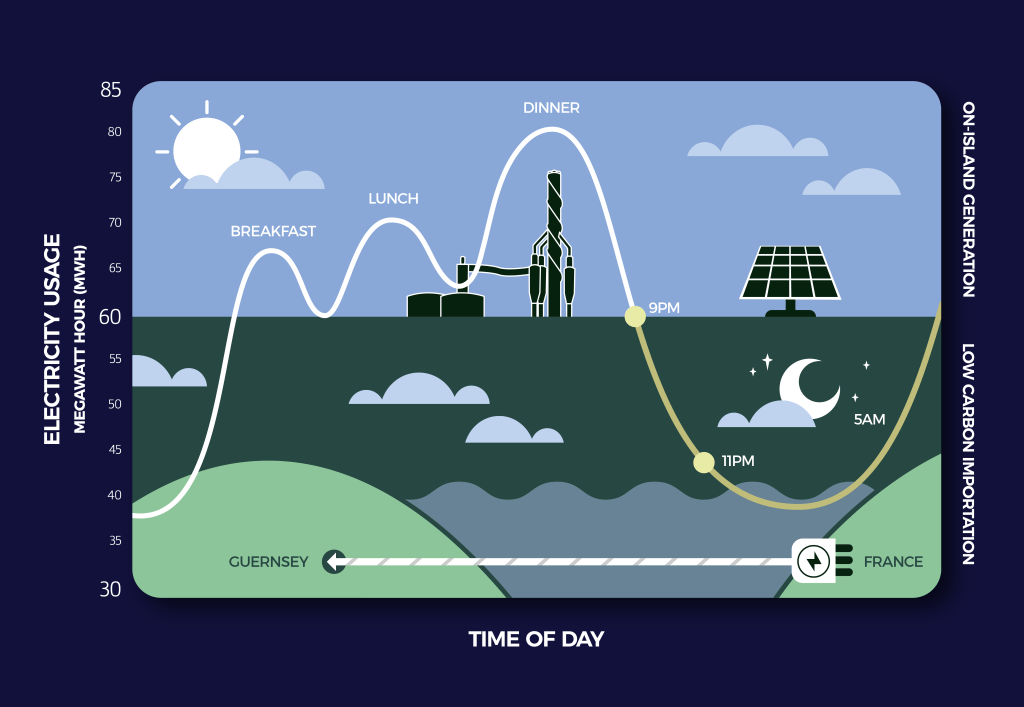
“During the summer the level of those three peaks is relatively flat but during the winter months, the evening peak becomes much bigger than the morning peak.”
“Ideally, to reduce that peak we want to avoid using any electricity,” he added.
“If we can move let’s call them less-essential tasks, like water heating as a good example, if you don’t need to heat the water for your shower or bath at 7pm, and either heat it earlier or ideally later in the day that is best.
“If you can move that to what we call the off-peak period, that’s our lowest demand, which is around three in the morning. Anything from 11pm to 5am is the ideal time for us, because we’re at our lowest point of demand, and that’s when we’re only relying on the subsea cable and we’ve got enough capacity on that that we don’t need to run any generators even in winter.”
