

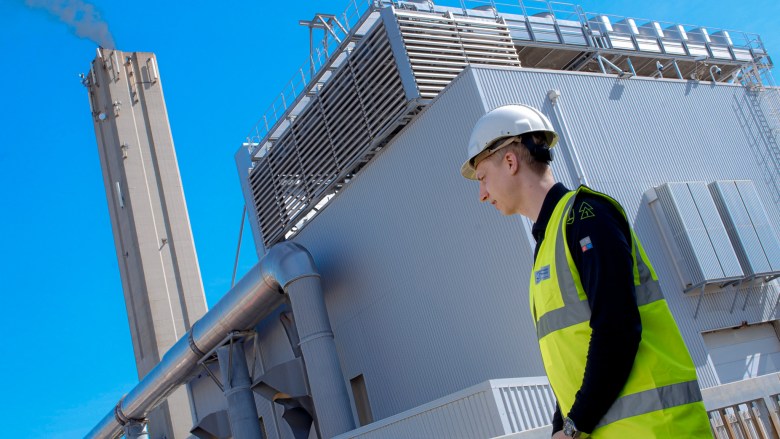
We know Guernsey Electricity wants to reduce our peak power demands but how and why that is so important might vary depending on what your point of view is.
Reducing our peak demand so we can rely solely on the subsea cable link with France means we could improve our green credentials by importing certified renewable energy.
Further improving our green credentials, reducing the peak demand for power would see a reduced reliance on on-island generated electricity.
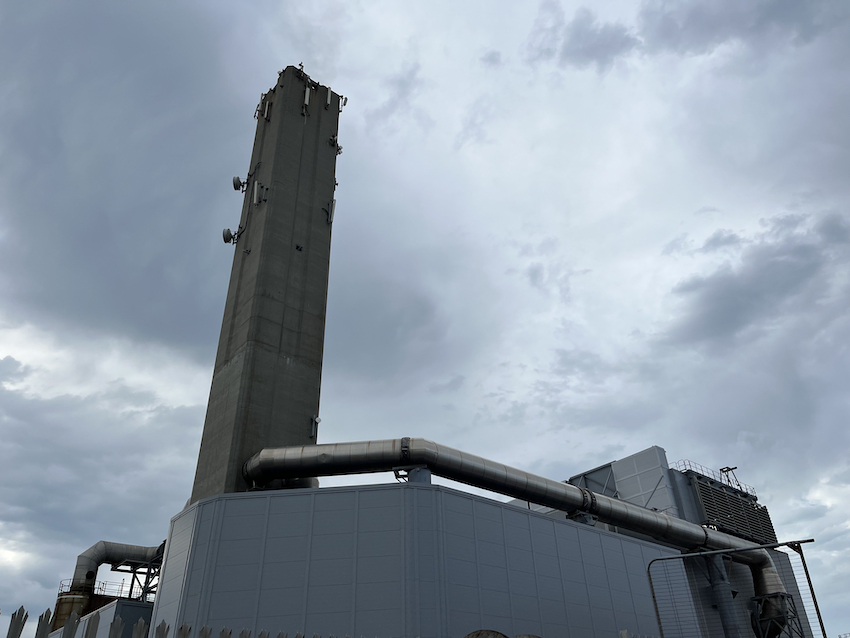
The emissions above Northside would be fewer and further between – and perhaps one day a thing of memory?
The ‘tank farm’ at the Power Station – which legally has to maintain a one-month supply of diesel in case the cable link goes down – could be reduced in size, and perhaps consigned to the past one day too.
A personal benefit that might please the pockets of many is a financial one.
By reducing our own individual peak demand for power, GEL tells us it will be cheaper for individual customers.
Before we can work out how to reduce the peaks, we need to confirm when the peaks are.
Operations Engineer at GEL, Joel Bramer said there are three peaks each day – the peaks themselves are lower in the summer than in winter, but they follow a similar pattern all year round.
“We have a morning peak that’s around 8am in the morning, we then have a lunchtime peak, and then we have the biggest peak, which is around seven o’clock in the evening,” he said
“During the summer the level of those three peaks is relatively flat but during the winter months, the evening peak becomes much bigger than the morning peak.”
The most electricity ever used in Guernsey was during one of those peaks in December last year.
Only 60MW can be imported via the subsea cable at any one time, meaning on that occasion more than half again was being generated by burning diesel at the Power Station on Northside.
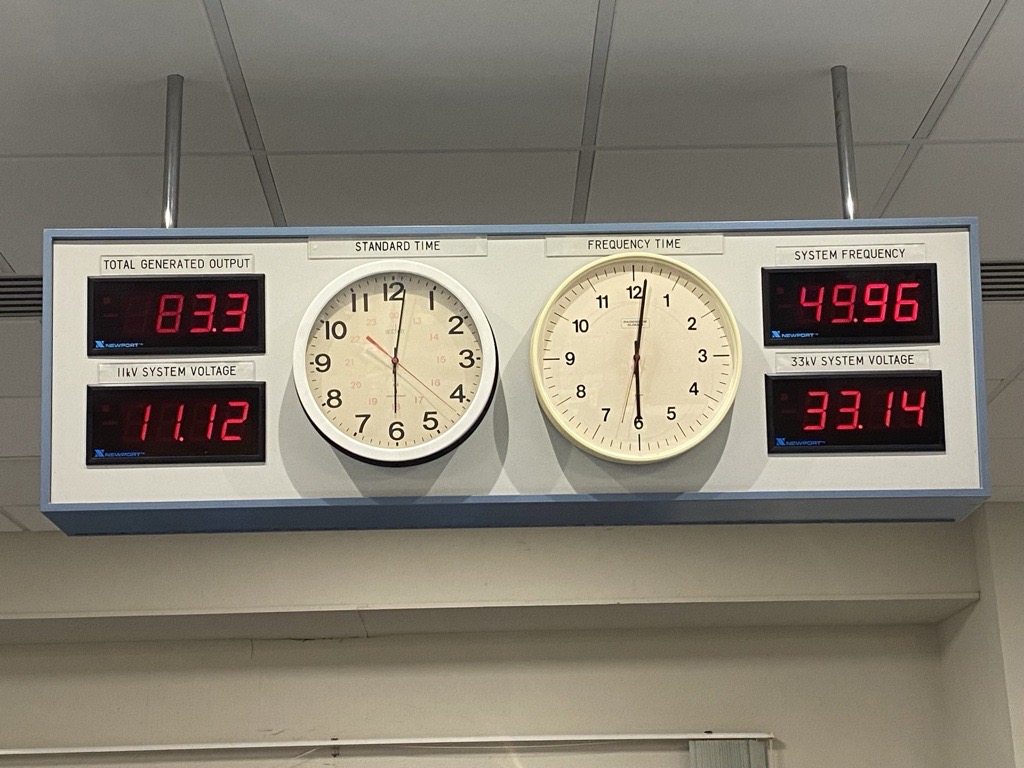
“The maximum ever recorded peak was 94.3MW. Call it 34MW above what we could supply through the subsea cable,” said Joel.
“That was actually three generators worth of demand that we needed. Three generators and typically, they run at somewhere in the region of about three tons an hour for a generator, so six tons every hour of fuel being burnt just to cover that. Admittedly, 94MW was a bit of a one off, but we’re consistently seeing peaks in the 80s during the winter.”
As we head into Autumn and then Winter, GEL will start generating more electricity on island to top up what it can import.
The three peaks each day will themselves increase as the colder weather comes in and the heating goes on, and more hot meals are cooked.
The amount of power needing to be imported or generated at those times is staggeringly high compared to the periods of lowest demand, said Joel.
To try and reduce demand across the peak periods, throughout the year but particularly during winter, GEL has been encouraging us all to run larger household appliances overnight.
If more people did that, the island could look to reduce its reliance on diesel engine generated electricity and rely more on the imported power coming through the cable.
With GEL expecting peak demand to breach the 90MW mark again this winter, Joel said ideally the island could aim for a 60MW demand – meaning our power could be solely supplied by the subsea cable.
To achieve that, Joel said we can all make some simple changes at home and work.
“Ideally, to reduce that peak we want to avoid using any electricity. If we can move let’s call them less-essential tasks, like water heating as a good example, if you don’t need to heat the water for your shower or bath at 7pm, and either heat it earlier or ideally later in the day that is best.

“If you can move that to what we call the off-peak period, that’s our lowest demand, which is around three in the morning. Anything from 11pm to 5am is the ideal time for us, because we’re at our lowest point of demand, and that’s when we’re only relying on the subsea cable and we’ve got enough capacity on that that we don’t need to run any generators even in winter.”
Joel added that most people could easily run their water heater overnight and not notice any difference at all.
“Most modern water cylinders, if you heat them overnight they will remain hot for several days. So, there’s very little chance of you actually running out of hot water if you only heat it overnight.”
Encouraging people to do this, Joel said there are financial incentives which can be realised by using timers and apps to make the most of the middle of the night off-peak periods.
“The biggest incentive is the financial one, because if you’re on the off peak overnight, rate it is much, much cheaper than the peak rate, as we call it.
“If you can move your water heating, or any other task like dishwashing or washing machine, any of those things, if you can put them on overnight, they’ll be saving you money and reducing our peak which is also helping to reduce our carbon impact.
“Again, with storage heaters, if you have the modern ones, they are not like the old fashioned ones where you have to think a day in advance and plan for these things and work out the timings,” he added.
“They’ve all got control systems on them now with thermostats and things like that so they don’t boil you just because they’ve heated up the night before, and they will only put out heat when they’re required. So, if you do have them charging up overnight, and then during the day, if it is cold, they will come on as they need to, but they’ll be avoiding any demand on the network when we ideally don’t want them to.”
If more people took advantage of the cheaper electricity available overnight and ran their boilers and household appliances overnight the difference would be measurable said Joel.
“You can imagine how quickly these numbers can build up. If you’re at home and you’ve got a typical hot water cylinder and a typical electric boiler. A typical hot water cylinder is probably three kilowatts and the element in that typical electric boiler might be 15kW so you’ve already got 18kW there. If you’ve then got your oven and your TV and a few other bits and bobs on, you’ve got to 20kW in a single home very, very quickly. If you multiply that across just 1000 homes, that’s 20MW so you can see how there’s a lot more than 1000 homes, but if everyone was to avoid doing that at the same time, then that can reduce our peak. So, if there’s no need to heat the hot water and have your heating on at the same time, then by all means, use whatever else it is that you need to do. But if you can avoid trying to stack too many things together, particularly the high energy usage devices that will help reduce the peaks.”
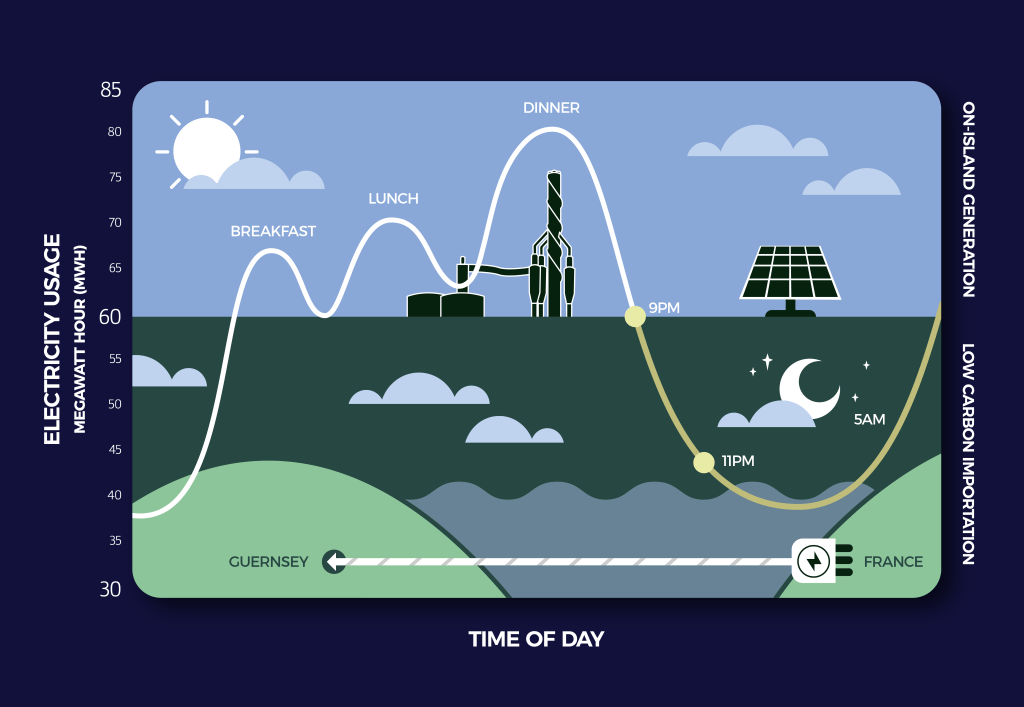
Even if everyone takes Joel’s advice and does what GEL wants us to, and defers switching our energy hungry appliances on until the middle of the night, it won’t cause the same peaks we currently see each evening
“The overnight peaks or the overnight demand, even in the winter months, will be quite a bit below the import capacity. So we’re talking maybe sort of 40MW out of, a total of 60MW that we have available. So there’s plenty of spare overnight in these off peak hours that could be used,” he said.
Tomorrow… How GEL generates our power, and what goes on behind the scenes at the Power Station.
