

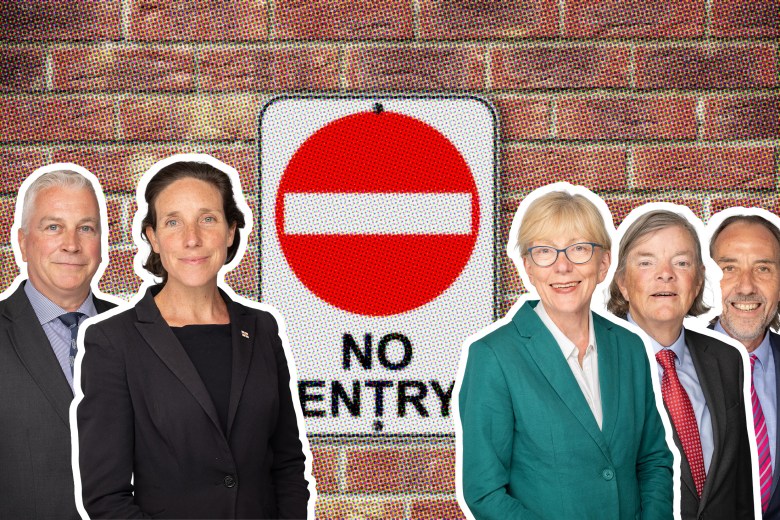
No deputies, including past and present members of Policy and Resources (P&R), have seen the modelling used to understand the knock-on effects of Guernsey’s latest tax reform proposals, which include GST, or the underlying data.
However the private firm at the centre of a political row will get access, as its “officers” are already “legally authorised to handle census data”, because of their previous work with the States’ rolling electronic census, the Chief Minister has told Express.
The revelation came after we asked P&R a series of questions in the wake of the political row over who is – and isn’t – allowed to see the modelling.
As uncovered in an Express exclusive earlier this month, Dorey Financial Modelling had been chosen by P&R to check its modelling, despite deputies outside P&R – along with journalists – being denied access as they say it contains “sensitive” personal information.
We now know that even P&R hasn’t seen the modelling it’s relying on to make the case for GST and the rest of its tax reforms.
Who can see the modelling?
Dorey… and five civil servants. That’s it.
Deputy Lindsay de Sausmarez, P&R President, said that just five civil servants had been allowed access to the modelling “currently or previously”.
However, Deloitte – the international accounting firm – had seen the “detailed outputs” to help them carry out “economic analysis”.
Deputy de Sausmarez said Dorey was chosen to do “third-party validation” of its modelling, as it was already “familiar with its structure”, “legally authorised to handle census data” and had “suitable storage and processes in place”.
Controversy
The decision caused controversy because the firm’s founder is a vocal, public supporter of GST and because it’s unclear how Dorey was picked and whether competitors were considered.
The arrangement means Dorey will be able to examine the underlying modelling – even though no elected politicians have seen it.
P&R says access is restricted because the model contains “pseudonymised” census data which could potentially identify individual households, and that only people sworn in as census officers can access it.
We have also learned that the model does not account for wage inflation, treats the impact of bad debt as being within its margin of error, and assumes that the opposing effects of GST and lower income tax and social security contributions on consumption will be neutral.
The current model uses a 2018-2019 Household Expenditure Survey to “derive a profile of spending”.
A more recent survey was released un July, but as it’s a “significant piece of work” it hasn’t been included in the model yet, though P&R expect it to be updated before the next debate starts in two weeks time.
To find out what we learned from the Chief Minister’s answers READ MORE HERE...
