

Jersey’s population is ageing – with the number of Islanders aged 65 and over growing by 13% in the last five years, while the population aged under 16 fell by 7%.
New population and migration statistics were published today, providing the latest insights into the size and composition of Jersey’s resident population and how it has changed in recent years.
The 2025 population and migration data released by Statistics Jersey looks at a number of factors, including age, residential and employment statuses, as well as nationalities and work permits.
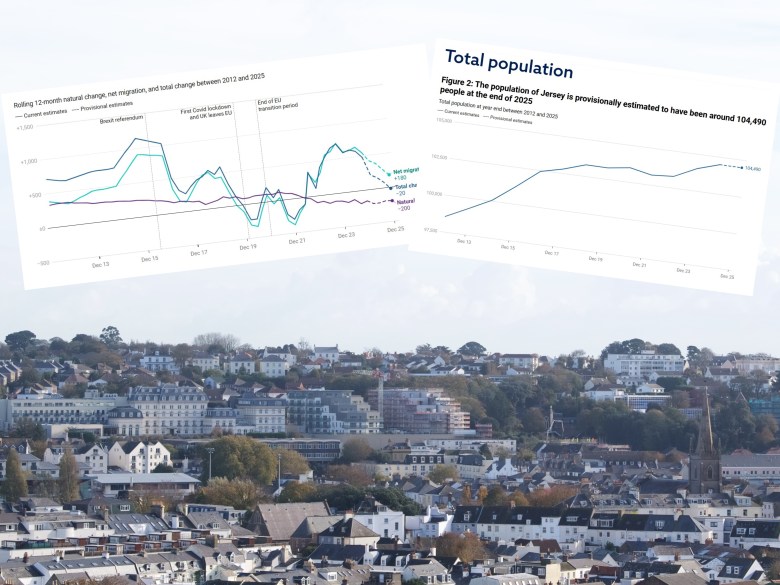
Jersey’s resident population was provisionally estimated at 104,490 people at the end of 2025, with “notable changes” in its composition over the last five years.
Express took a look at the figures…
The statistics at a glance…
- Jersey’s population, as of the end of last year, is provisionally estimated to be 104,490 – remaining essentially unchanged from the revised 2024 estimate of 104,500.
- There were 200 more deaths than births during the year.
- Net migration fell to +180 (more immigration than emigration), which was the lowest the figure has been in three years.
- Without migration, the working-age population would have fallen in the last five years by an average of 370 people per year due to ageing and deaths.
- The population aged 65 years and over grew by 13% between 2020 and 2025, while the number of under-16-year-olds fell by 7%.
- The ‘licensed’ population (those working in a role for which their employer holds a ‘licensed’ permission for them) increased by 44% between 2020 and 2025, as net migration outweighed movements to other statuses.
- An estimated 1,270 people gained ‘entitled’ status in 2025, mostly reflecting migrants who reached ten years of continuous residency.
- Between 2020 and 2025, the non-European adult population rose by 177%, from 2,020 to 5,590, while the European (excluding Jersey or British) population fell by 9% from 16,820 to 15,240.
- The largest percentage increases over the period were among the Kenyan (1,065%) and Filipino (367%) nationalities, with Statistics Jersey noting that this partly reflected their small populations in 2020.
- The number of residents with temporary work permits increased from 80 at the end of 2020 to 1,890 at the end of 2025.
Statistics Jersey noted that: “Although Jersey’s resident population grew by around 1,000 people between 2020 and 2025, this headline figure includes people living in Jersey on temporary work permits whose residence does not count towards qualifying for indefinite leave to remain.
“After Brexit, the number of residents with temporary work permits increased from 80 at the end of 2020 to 1,890 at the end of 2025, mostly among those with non-European nationalities.”
The organisation continued: “The nationalities and work permits report presents the size of the resident population measure excluding people on temporary work permits.
“On this basis, the estimated population in 2025 was 102,600, down 810 from the equivalent 2020 estimate.”
Our policies must recognise this reality by supporting employers to recruit and, crucially, retain a sufficiently large, productive workforce needed to sustain and grow our economy, support an ageing population and deliver our public services
Interim Chamber of Commerce president Eliot Lincoln
Interim Chamber of Commerce president Eliot Lincoln said that the figures “underline the scale of Jersey’s demographic challenge”.
“The dependency ratio is now nearly 54 dependents for every 100 people of working age, a worrying increase of five in the past decade alone.”
He continued: “Since 2020, the number of under-16s has fallen by 7%, while the number aged 65 and over has risen by 13%. Excluding those on temporary work permits, Jersey’s population has actually fallen by 810 [in the same period].
“Our policies must recognise this reality by supporting employers to recruit and, crucially, retain a sufficiently large, productive workforce needed to sustain and grow our economy, support an ageing population and deliver our public services.”
