
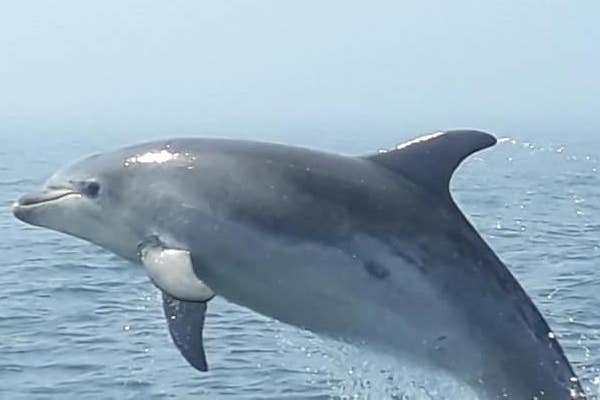

A sailboat monitoring the Bailiwick’s cetacean populations – dolphins, porpoises and whales – has returned for the second year.
The University of Plymouth’s sailboat, ‘Take the Helm’, are monitoring the mammal species found in the Channel Islands’ waters.
The survey’s data, collected over a 10-day period, will build a clear picture of the populations and movements of these animals in Guernsey and Jersey’s waters. It will supplement data gathered from public sightings, acoustic monitoring and land based observations from the islands.
Driving forward conservation efforts
The project is a collaboration between La Société Guernesiase, the University of Plymouth’s Marine Vertebrate Conservation Reseach Unit, Guernsey Ports and the Nature Commission.
It is part of La Société’s ‘DolFin Project’, which received funding from the Nature Commission’s State of Nature Grant. It hopes to link local environmental students and businesses in marine conservation group.
Nicola Harris, Marine Biology Section Secretary at La Société Guernesiase, said: “Guernsey’s water support rich and varied biodiversity, but much of our understanding relies very heavily on citizen science and volunteering initiatives.
“This survey provides a great opportunity to collaborate with academia to collect high quality data and use the outputs to drive forward effective management and conservation for the long-term health of our waters.
“We hope this partnership fostered with University of Plymouth can continue to grow and provide mutual benefits to the Channel Islands and academic research.”
Meet the experts…
The crew of the vessel have two experienced cetacean PhD researchers.
Beth Harvey specialises in studying the distribution of cetacean species across the Western English Channel Important Marine Mammal Area – an area that encompasses the English south coast from the Isles of Scilly to East Sussex, the western coast of Brittany and the waters of the Gulf of Saint-Malo which incorporates Jersey and Guernsey.
The other PhD researcher is Becky Dudley who is looking at the impact of human activities on small dolphin species like bottlenoses.
They are joined by Dr Simon Ingram, co-lead of the University’s Marine Vertebrates Conservation Research Unit and a senior academic in the School of Biological and Marine Sciences.
A member of Guernsey Ports’ team will join the boat on one day of the survey, learning how data can be collected by local and visiting vessels to create a more sustained monitoring of these marine mammals.
Kieran Higgs, Head of Port Operations, said: “Guernsey Ports is delighted to support the return of Take the Helm to Victoria Marina, particularly with one of our own team members – a qualified marine biologist – actively involved in the survey work.
“This collaboration will help us find better ways to encourage boat owners to report local cetacean and marine mammal sightings, deepening our understanding of the wildlife in our Bailiwick waters.”
