


Buried within the Government Work Plan is a startling confession with major consequences for people in Guernsey: without intervention, the cost of healthcare could rise by at least £45m annually by 2040… Express digs into the issue, and why it could potentially mean paying for hospital stays in future…
Our single biggest pressure
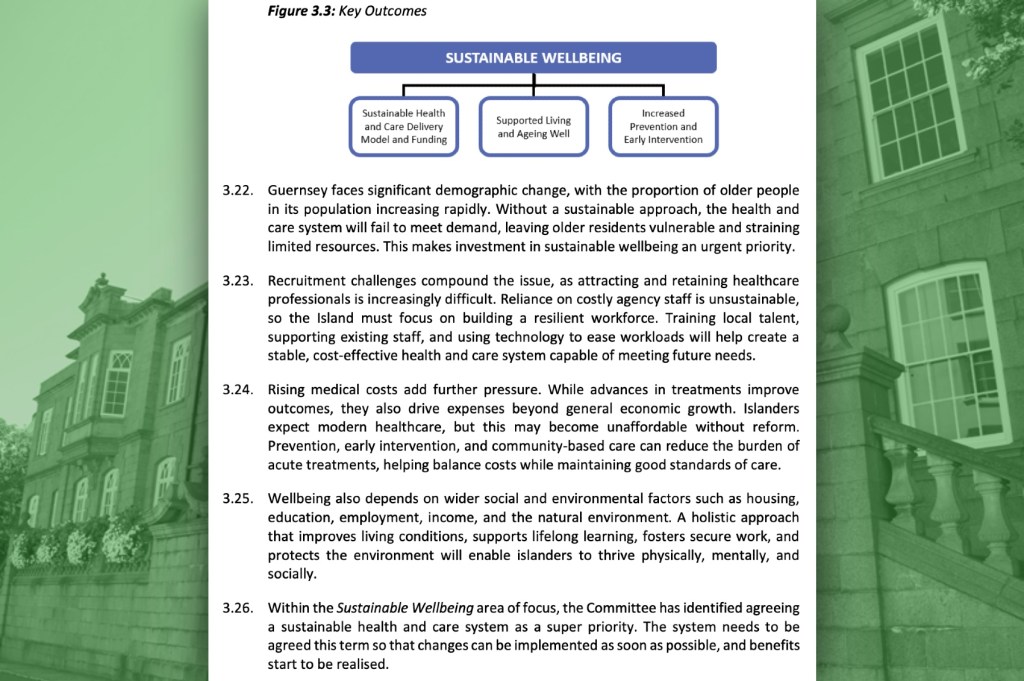
The Government Work Plan identifies that Health and social care spending is the single largest financial pressure facing the island.
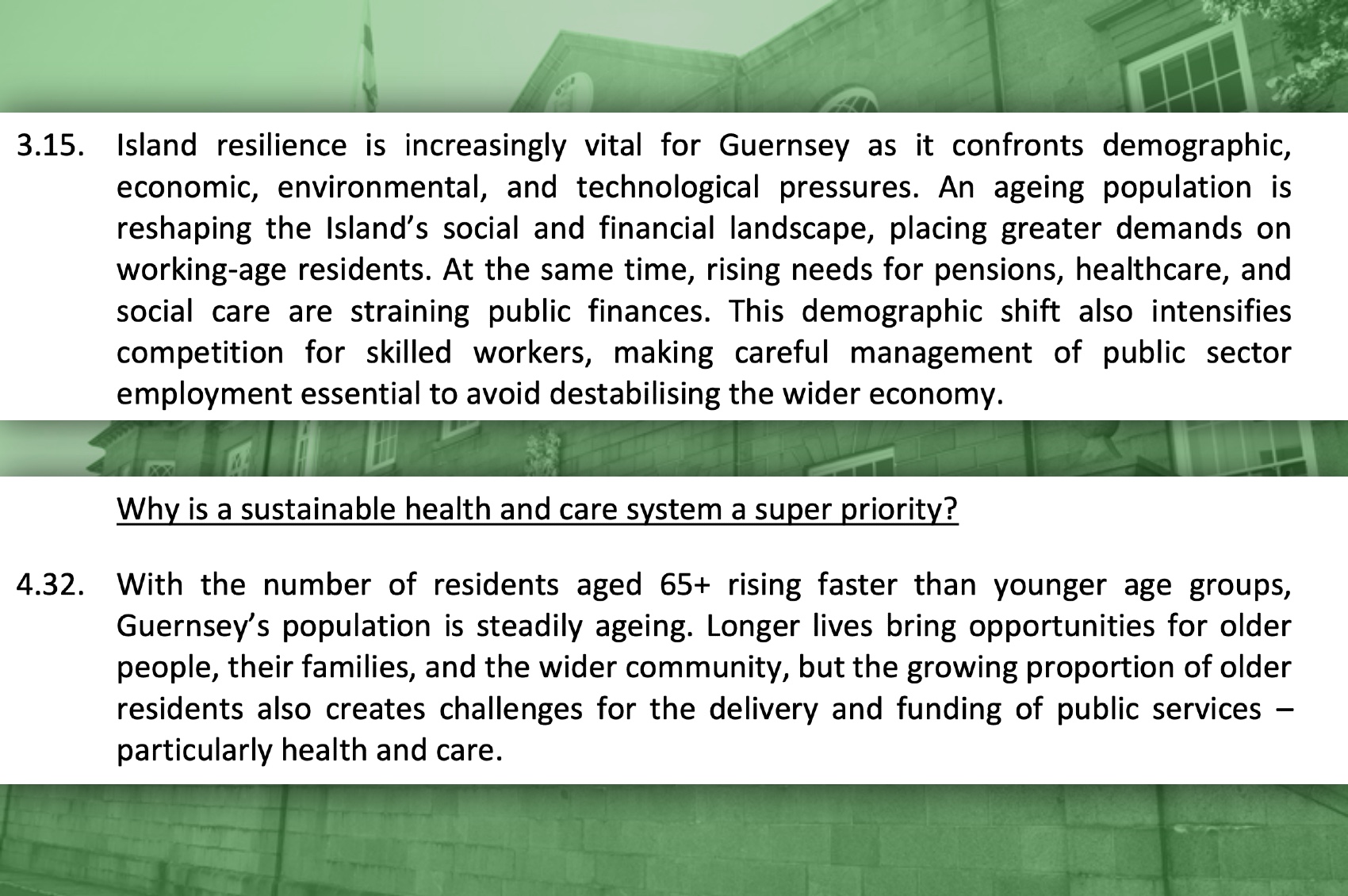
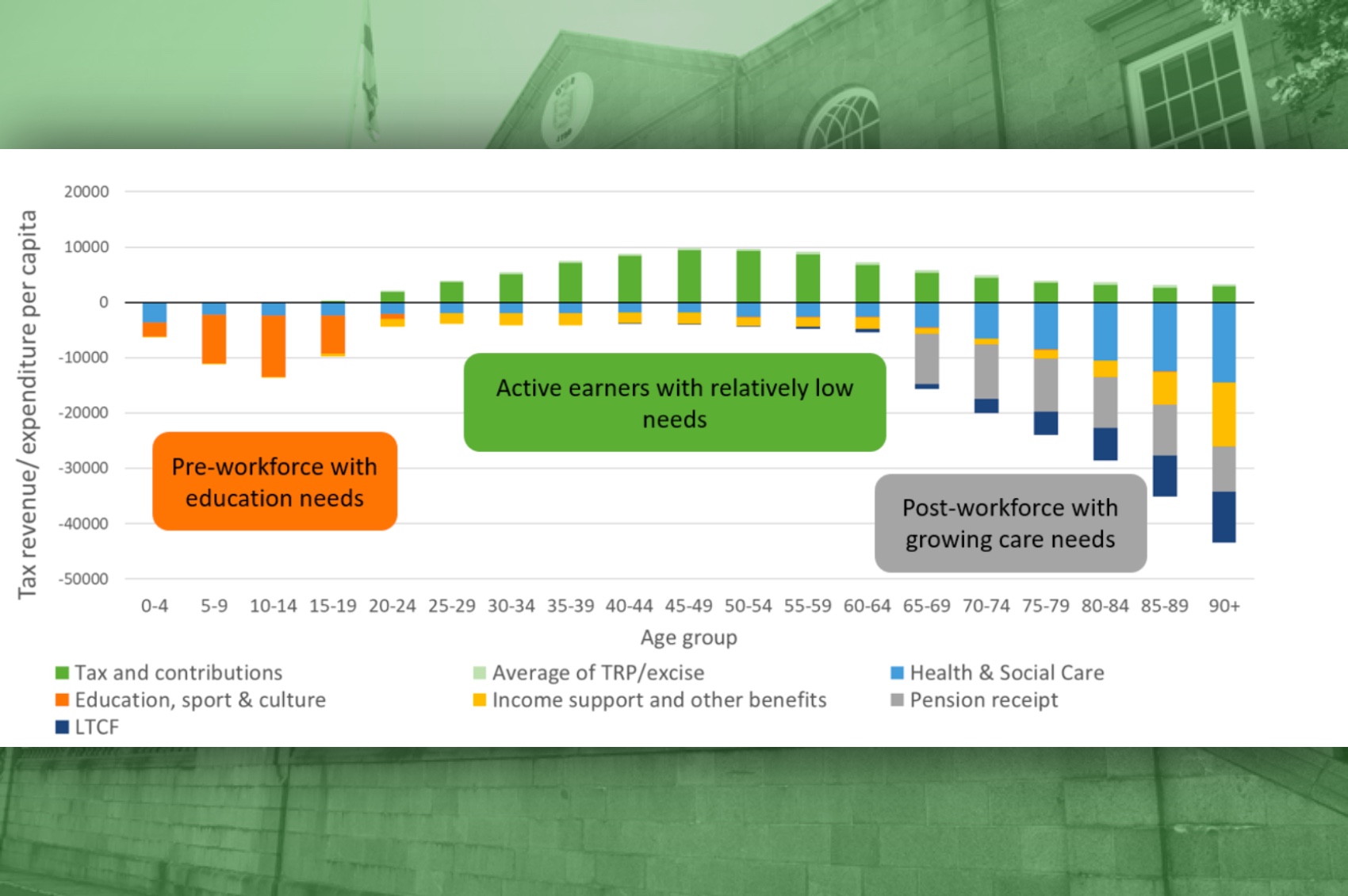
A key reason for that is because of the island’s changing demographics, which means that the proportion of older islanders is increasing. That, in turn, puts more strain on the health service.
The GWP lays out the challenge clearly: “As people age, they are more likely to develop complex and chronic health conditions. Older individuals therefore require greater attention from health and care professionals, as well as increased support with daily living. Rising life expectancy in the late 20th and early 21st century has also extended the number of years during which people need care and support, further driving demand for health and care services.”

Without any form of intervention, the GWP says that the cost of care could “rise by at least £45 million annually by 2040”.
To counter this, the States intend to explore what they describe as a new ‘Sustainable Health and Care Delivery Model’ – in other words, they are putting together a plan for how we deal with these costs.
This plan, the GWP says, will be one that looks at the “relative contributions received directly from individual users, insurance and government”.
However, Islanders are already facing cost increases in those areas already, with a five-year plan approved and currently underway increasing costs to the “individual user” – so, every member of the working public who accesses health services.
Given how important this is to islanders’ future wellbeing, this has been named one of the five “super priorities”.
What’s already been done?
Last term the States agreed to Employment and Social Securities plans to up the cost facing the user, with the price paid gradually increasing by a total £170.98 over a five-year period, going up from £342.02 per week to £514.00 per week.
That equates to a rise of £17,784 to £26,728 annually, excluding any potential inflation.
During 2026 alone, the current weekly cost of £361 will increase to £396.76 from 5 January, and up to £424.61pw from 6 July, following a vote to approve the next round of increases in October.

Using the officially published median earnings for employees in Guernsey, set at £42,672, the average employed islander will see an estimated increase of 82 pence per week or £42.67 per year.
What’s to come…?
Despite Islanders already facing creeping contribution costs, there could be more to come with Policy and Resources clarifying in the GWP that they’ll be looking at a range of options to balance out the costs of care locally.
Right now, local patients only have to pay for what’s known as ‘primary healthcare’ – that means things like prescriptions, A&E treatment/ambulances and GP visits.
However, the GWP says the ‘Sustainable Model’ will include a review of the “secondary healthcare contract”. That means that, in future, islanders might have to pay for services ranging from hospital stays to x-rays and consultant appointments.
Elsewhere, the GWP speaks of “medicines management” – what and how much is being prescribed, and if this can be done in a more cost-effective way – as well as exploring whether there are services currently delivered by our health department that could instead be handled by charities and the third sector.
Policy and Resources also makes it clear that this review will also sit alongside ‘SLAWS’ (the Supported Living and Ageing Well Strategy), the blueprint for the current increases to contributions.
Meanwhile, across the water…
Guernsey isn’t alone in the challenge of having to get a handle on its health finances, while considering the challenge of an ageing population.
The number of older islanders in Jersey is also increasing, and the island recently saw births fall to a new low, behind the number of deaths.
Jersey’s health service has been grappling with repeated overspends, which led to the latest Budget including a plan to charge charge people who attend the Emergency Department when care would be better administered by their GP. This would be at the same rate as the fees charged by Jersey Doctors on Call – £77 for islanders and £97 for non-residents.
There will also be a £55 charge for missing an outpatient appointment – with it being estimated that around 12,000 patients fail to attend such sessions each year.
Those plans came under strong criticism – but they ultimately passed as part of the Budget when it was debated earlier this month.
Other ways of balancing finances
Health isn’t the only financial pressure the GWP is wrestling with, however – and it’s not the only potential area in which people in Guernsey could face increased costs.
We’ll know more in the second quarter of 2026, with the findings of the Tax Review Sub-Committee, and their proposed tax package will be presented to the States Assembly for debate.
Two years later, in early 2028, we could see the earliest possible implementation date for any finalised tax reform package.
That’s as part of Policy & Resources’ plans to fix Guernsey’s financial position, and the suite of fiscal objectives and tax-related measures set out in the Government Work Plan 2026-2029.
Follow Express for more analysis…
