

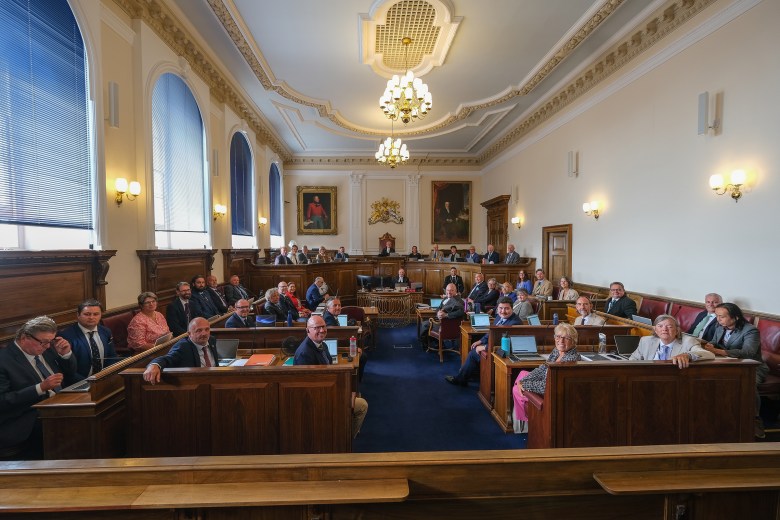
Last week’s states might have felt like it was all about GST – and in many ways it was.
But with the vote on tax reform delayed until September, what did the States actually decide last week?
Appointments
The first order of business for the States on Wednesday was a relatively non-controversial series of appointments.
Deputy Gavin St Pier returned to committee work for the first time since he was booted off Policy and Resources (P&R), being elected to the vacant position on Employment and Social Security (ESS).
Deputy Marc Leadbeater joined Economic Development (ED), replacing Deputy Haley Camp who resigned earlier this month with a scathing attack on what she saw as the committee’s “authoritarian” leadership style.
While Deputy Leadbeater faced a ballot against Deputy Simon Vermeulen, securing the seat by 26 votes to 11, Deputy St Pier was the only candidate to come forward for the ESS role.
The Assembly also appointed six people as Commissioners for the Overseas Aid and Development Commission, including three reappointments.
Minimum wage
Given that the GST vote has been delayed, probably the biggest thing the States decided that will affect people’s day-to-day lives is to increase minimum wage, from October.
Adult wages will go up from £12.60 to £13.10 per hour, while 16 and 17-year-olds will see the minimum wage go from £11.35 to £11.80.
However, plans to bring the under 18 rate in line with adults were scrapped, after opposition from some business owners.
Updating military law
The Assembly also voted to update the way UK military law applies in the Bailiwick.
The Armed Forces Act 2006 (Bailiwick of Guernsey) Order 2026 updates the Bailiwick’s military justice arrangements by extending parts of the UK’s Armed Forces Act 2006 to Guernsey, Alderney and Sark, ensuring service personnel can be dealt with under modern armed forces law.
It also brings into force a 2018 Bailiwick law that sets out how military offences and service court jurisdiction operate locally, allowing the two legal frameworks to work together.
Tax reform amendments
Despite the other business, really the only show in town last week was tax reform.
Deputies put forward a whopping 27 amendments and one sursis motivé – or delaying motion – suggesting everything from a committee to control spending to an entirely different set of tax proposals.
While the Assembly ran out of time to debate them all – and chose not to debate four of David Goy’s alternative tax proposals – it did debate and vote on eight amendments, rejecting five.
As well as rejecting the delaying motion, the Assembly voted against the following amendments:
- Permanently taking GST off the table
- Putting GST to a referendum
- Setting up an Appropriations Committee to control spending
- Scrapping GST in favour of corporate levy and other taxes, and
- Removing GST and the transport levy from the proposals
However, the Assembly did vote to:
- Look into creating a single common tax rate framework
- Introduce a tax break for all parents, regardless of income
- Peg government spending, so it can’t rise higher than inflation
The amendments that passed will only take effect if a future Assembly ultimately approves the wider tax reform package, including GST.
