

For full disclosure, I am a former Chief Technical Officer with a 20+ year background in tech and have been involved in some of the Digital Greenhouse’s programmes, including winning a (non-taxpayer-funded) grant as part of the Venture Challenge. I also know some of the people who work there and use the co-working space.
The States doesn’t have enough money – to the tune of about £50m a year.
Policy and Resources’ (P&R) solution is to raise more tax money.
Plenty of other people, including some deputies, have called for the States to rein in spending and cut waste before raising taxes, with calls for the government to “get its own house in order”.
So news that Economic Development (ED) has taken the bold decision to discontinue supporting the Digital Greenhouse may have initially been welcomed by some of the people calling for savings.
However, Express has since found out that the committee is not ruling out spending the money saved – estimated to be about £450,000 a year – elsewhere.
This is what cuts look like
Regardless of whether ED spends the money elsewhere or puts it in the bank, the potential closure of Digital Greenhouse is a timely reminder of what cuts look like.
Having gone through some of the Digital Greenhouse’s programmes, I know there are some very talented and hard-working people working there who’ve supported everyone from fledgling businesses to tech-savvy school kids.
They will undoubtedly be worried about what comes next, and presumably heartbroken that all of their hard work might be about to be dragged to the trash can icon.
Likewise, Express has already heard from many entrepreneurs and business owners who’ve used the co-working space and gone through the hub’s programmes – and the people we’ve spoken to are universally upset.

That doesn’t make the decision by Economic Development wrong.
But it does show that there are consequences to cuts.
People’s jobs go. People lose out on services they valued. And nobody is going to write to the politicians who took the decision thanking them.
If you’re anti-GST and calling for the States to cut spending instead of raising taxes, then you’re effectively asking politicians to take about 99 similar decisions over the next few years.
Bank the money or spend it elsewhere?
Of course, there’s no guarantee Economic Development is actually going to bank the money.
If Economic Development is going to reduce its budget by £450,000 then many would argue that – while it’s sad for the people directly affected – this is exactly the kind of cuts the States should be looking at.
It’s certainly better than cutting front-line services, which would affect some of the most vulnerable people on the island.
However, that argument only holds if ED reduces spending, rather than just spending the money elsewhere.
Deputy Marc Laine told Express Digital Greenhouse’s budget could be “more effectively spent in ways which would have a greater impact”.
Of course, he hasn’t ruled out reducing ED’s budget – but those are hardly the words of someone claiming a victory for fiscal responsibility.
If the committee does eventually decide to bank the money, it will go a small way to reducing our financial “black hole”.
If not, there’s an argument ED have just committed an act of economic vandalism, throwing away a decade of good work without any clear plan of what comes next.
What did the Digital Greenhouse achieve?
When the Digital Greenhouse was set up in 2016, its goal was to “stimulate, inspire, and promote growth in the digital and creative sectors”.
As well as a physical co-working space and innovation hub, it was designed to improve the community’s general “digital wisdom”, and act as a conduit to connect local startups with angel investors.
Ultimately, it was meant to be a government-funded catalyst that would plant the seeds for a self-sustaining tech ecosystem, like similar tech hubs had done in London, Cambridge and North America.
Looking back, the core question isn’t whether the hub was a nice place to work – it’s whether it actually achieved what it set out to.
Looking back at the original objectives, the project has been far from an abject failure.
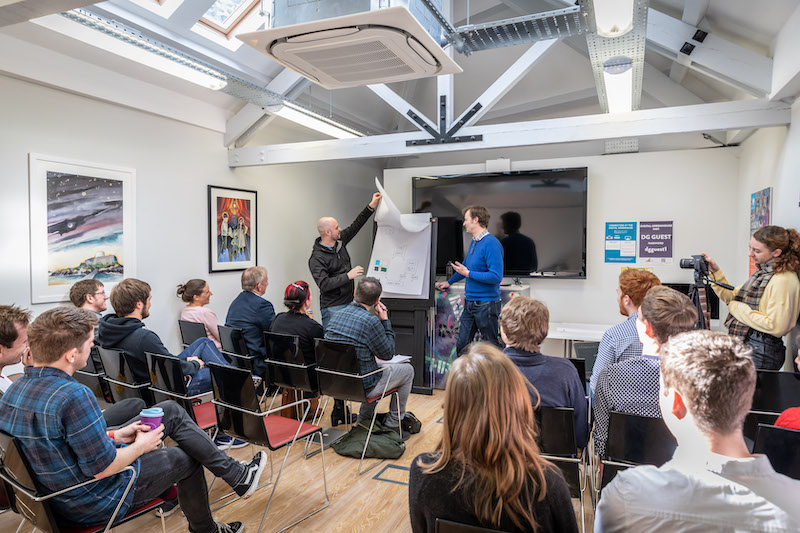
As a co-working space, Digital Greenhouse is clearly successful, with dozens of business and freelancers sharing a vibrant space.
Likewise, when it comes to events and education, there’s a strong argument that the team have added a lot of value to the local community.
In an island that’s had tech disaster after tech disaster – from MyGov, to Agilysis, to the Electronic Patient Record project – the Digital Greenhouse hasn’t overrun its budget by tens of millions or delivered projects that don’t work years late.
It’s not just that these projects went disastrously wrong, it’s the lack of proper accountability.
There don’t appear to be any serious consequences for those responsible.
As a former project manager on multi-million and even multi-billion pound tech projects, my job was to keep things on time and on budget.
If I didn’t, I’d be out the building.
So it seems a little unfair that the staff at the Digital Greenhouse are being moved on, while many of the people who were responsible for wasting tens of millions of pounds of taxpayers money are still in their jobs.
(Though, of course, we don’t yet know how much they were allowed to do their jobs properly)
Where’s Guernsey’s unicorn?
However successful the co-working spaces and education programmes were, when it comes to being a catalyst for a high-tech startup ecosystem, the Digital Greenhouse’s achievements look more modest.
What it can demonstrate is a strong track record in helping some interesting businesses get started.
Companies like Map Health and AI / data consultancy Concise, and media outlet The Quarry are clear success stories.
What we don’t have is what tech investors call a ‘unicorn‘ – a company capable of reaching a $1bn valuation.
In fact, we don’t have anything close.
The hope when Digital Greenhouse was founded was that it would help create a company that could be the island’s next Specsavers of Funky Pigeon.
By that measure Digital Greenhouse hasn’t come close to achieving what politicians at the time hoped.
Are we chasing ‘ski season’?
One question politicians should consider is whether Digital Greenhouse ever had a realistic chance of generating the kind of tech ecosystem that politicians hoped for.
The Digital Greenhouse was named in honour of a previous backbone of the island’s economy, the growing industry.
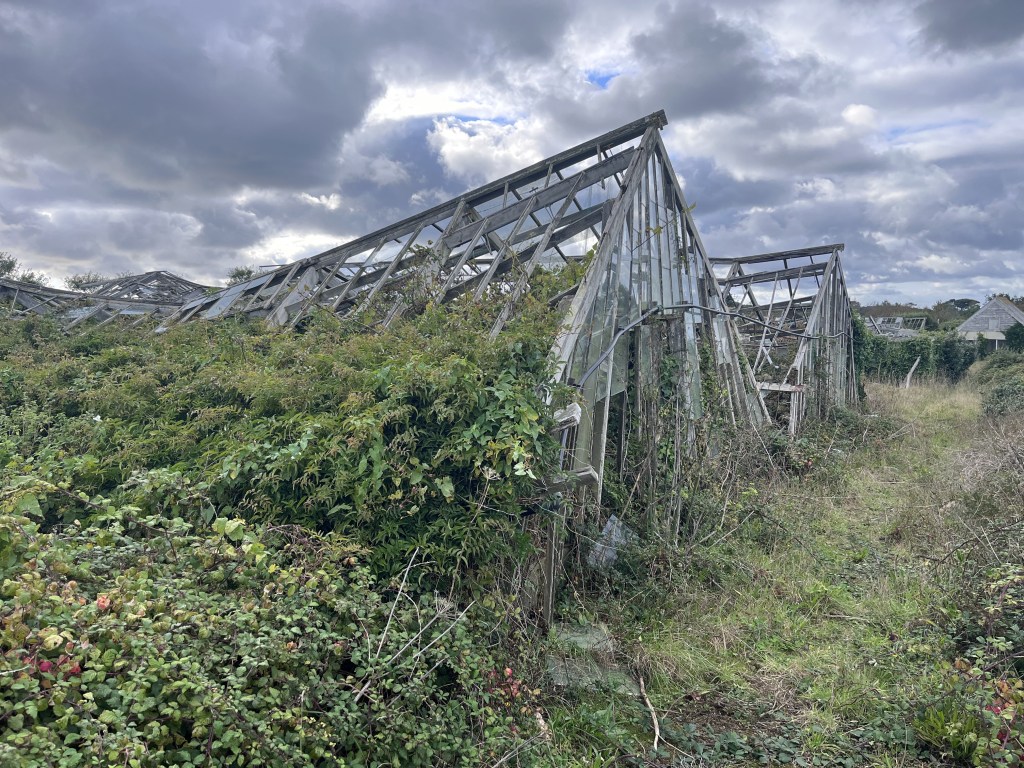
The now-dilapidated greenhouses scattered over the island are a poignant reminder that a growth doesn’t last forever.
Deputies are right to try to diversify our economy, so all our eggs – or should that be tomatoes – aren’t in the finance basket.
However, it’s important to recognise two truths:
- The growing industry didn’t flourish because a politician in the 1870s suggested using taxpayers’ money to build a greenhouse – it flourished because entrepreneurial islanders started planting literal seeds.
- The reasons tomato growing bloomed – and the reasons it eventually died off – are to do with the island’s climate, location – and the evolution of technology.
We grew tomatoes in Guernsey because our climate was mild, and because we’re quite close to the mainland UK, and were politically tied to it.
The industry started dying off when improved transport and refrigeration technology meant southern-European and north-African countries, like Spain and Morocco, started being able to outcompete us. (As well as many other factors)
It’s understandable the Deputies look elsewhere in the world and think: “What’s working that we could borrow?”
Ten years ago, that was a tech economy, today it’s AI data centres.
But economies don’t exist in isolation from the land they operate in and the people they serve.
One of the reasons Morocco can sell fruit at a cheaper price than an island like Guernsey is that wages are far lower there, and they have year-round sunshine.

The skiing industry is worth more than £5bn to the Austrian economy – enough to cover ten years of our financial deficit.
So why aren’t P&R spending taxpayers’ money trying to encourage skiers to the Bailiwick?
Surely the Val des Terres is steep enough?
Of course, the simple answer is that we don’t have any snow.
So we’ll forgive P&R for not tilting at that particular windmill.
But we also don’t have many of the things needed to scale a tech economy.
Things like a large talent pool of software graduates, senior leaders with experience scaling up, and a pool of early-stage venture capital ready to back high-risk tech start-ups.
None of the that is Digital Greenhouse’s fault. Nor is it down to our Deputies.
So perhaps the noble idea of turning Guernsey into the next Silicon Valley – or even Silicon Roundabout – was doomed to fail from the start.
The entire of the UK has ‘only’ produced 67 unicorn companies to date, so perhaps it’s unsurprising that little old Guernsey, with a population more than 1,000 times smaller, hasn’t produced any.
Some Deputies seem to think that because some tomato growers and their children were trained up in trust administration in the 1970s and 1980s, that means today’s workforce could be retrained as software developers.
I’ve no doubt many could, but it’s a skill that takes time and dedication to learn – and you need to have the aptitude too, as well as seasoned mentors when you’re starting out.
Just as not everyone has the potential to be a surgeon or basketball player, not everyone can be a programmer or data engineer.
So the idea this could be done en masse is – in my experience – dubious.
Side note: If you want to know my thoughts on whether AI is a viable option for the island, see here.
Guernsey-sized innovation
There’s a middle ground, of course, between shooting for Guernsey to have the next Meta or Google, and doing nothing to modernise and evolve our economy.
We don’t need to chase the white whale of a billion-dollar unicorn startup, nor do we need to pretend we’re going to build energy-guzzling AI data centres on an island with limited power and communications infrastructure.
Instead, we should look at how Guernsey can play a targeted role within the global tech ecosystem, rather than trying to recreate the entire machine ourselves.
Instead of trying to build the next global platform, why not position Guernsey as a specialised service hub for existing tech giants and mid-sized firms?
- Specialised Customer Support & Operations: Global tech companies desperately need high-touch, highly regulated customer support, fraud prevention, and operational compliance.
- Localisation & Quality Assurance Testing: We have an island of tech-literate, native English speakers with a deep understanding of complex financial and administrative workflows.
Look at what skills we already have. Guernsey’s workforce is built on meticulous compliance, administration, customer service, and process management.
A trust administrator or a shop worker isn’t going to transform into a senior machine learning engineer overnight – and they shouldn’t have to.
Instead of forcing square-peg administrative workers into round-hole software engineering bootcamps, we could retrain finance admins in AI prompt engineering, tech compliance, financial operations (FinOps), and remote client success.
A former store manager or administrator already understands customer workflows, attention to detail, and operational logistics.
With focused training, those same people could manage operational teams for global software platforms, conduct user acceptance testing for fintech tools, or handle specialized fraud operations.
By leveraging the skills we actually have – rather than pretending we’re a mini-Silicon Valley – we can build realistic, sustainable tech careers for locals without pouring millions of taxpayers’ money into empty hub promises.
What is the role of government?
Perhaps one of the things Digital Greenhouse did best was the co-working space.
But the issue with that is that taxpayers ended up subsidising desks for small businesses, many of which have already become profitable, when there are commercial offices empty in St Peter Port and Admiral Park.
If we’d spun out Guernsey’s version of TikTok perhaps nobody would mind, but we haven’t.
And while some people starting out genuinely couldn’t afford their own office space on their own, many of the people there could.
The question has always been, should the government be undercutting the private sector and spending taxpayers’ money subsidising profitable small businesses?
If ED is serious about facilitating Guernsey-sized innovation, perhaps the committee-members’ time would be better spent trying to woo big tech companies to set up satellite offices here.
Doing things this way, rather than ploughing taxpayers’ money into ill-thought-out projects, also has the advantage of passing the ‘fail early, fail cheaply’ test.
Asking for a Teams meeting with a tech company is a lot cheaper than trying to build up infrastructure themselves, and if they don’t take the meeting or tell you it’s a rubbish idea, ED will have spared the island yet another embarrassing and expensive mistake.
Was it the right decision?
If ED cuts its budget by £450,000 then there’s a strong argument that the decision itself was justifiable, however painful.
Digital Greenhouse has done many valuable things, but after 10 years it hasn’t been the catalyst for the kind of tech ecosystem that deputies at the time wanted.
That doesn’t mean the messaging was handled perfectly, or the lack of a plan is ideal.
But if closing a government-funded co-working space is the start of a serious effort by the States to reduce spending then many would argue it’s a sacrifice worth making.
Particularly if it helps reduce the need for tax reform and the dreaded GST.
If something needs to be cut, it’s better that it’s office space rather than emergency housing or a ‘meals on wheels’ service.
However, Guernsey’s deputies have shown – time and time again – they:
- Don’t really understand innovation
- Can’t predict the future or foresee knock-on consequences
- And are incredibly capable of spending – some might argue wasting – money on projects that at best don’t achieve what they set out to and worst cost millions more than their budgets, are delivered years late, and deliver little or no value
If stepping back from or closing Digital Greenhouse means reducing the size of government and protecting frontline services, many people will welcome.
But perhaps deputies should take the final logical step: give the taxpayers their money back, and stop trying to get involved in things they don’t understand it.
